Lake Elmo Park Reserve - First move, final setup, and thoughts on farming
We’re two weeks in and have done our first paddock move and finished some setup work. I often get questions about fencing and how this all works for “free-ranged hogs” so I thought I’d give a little overview of our setup.
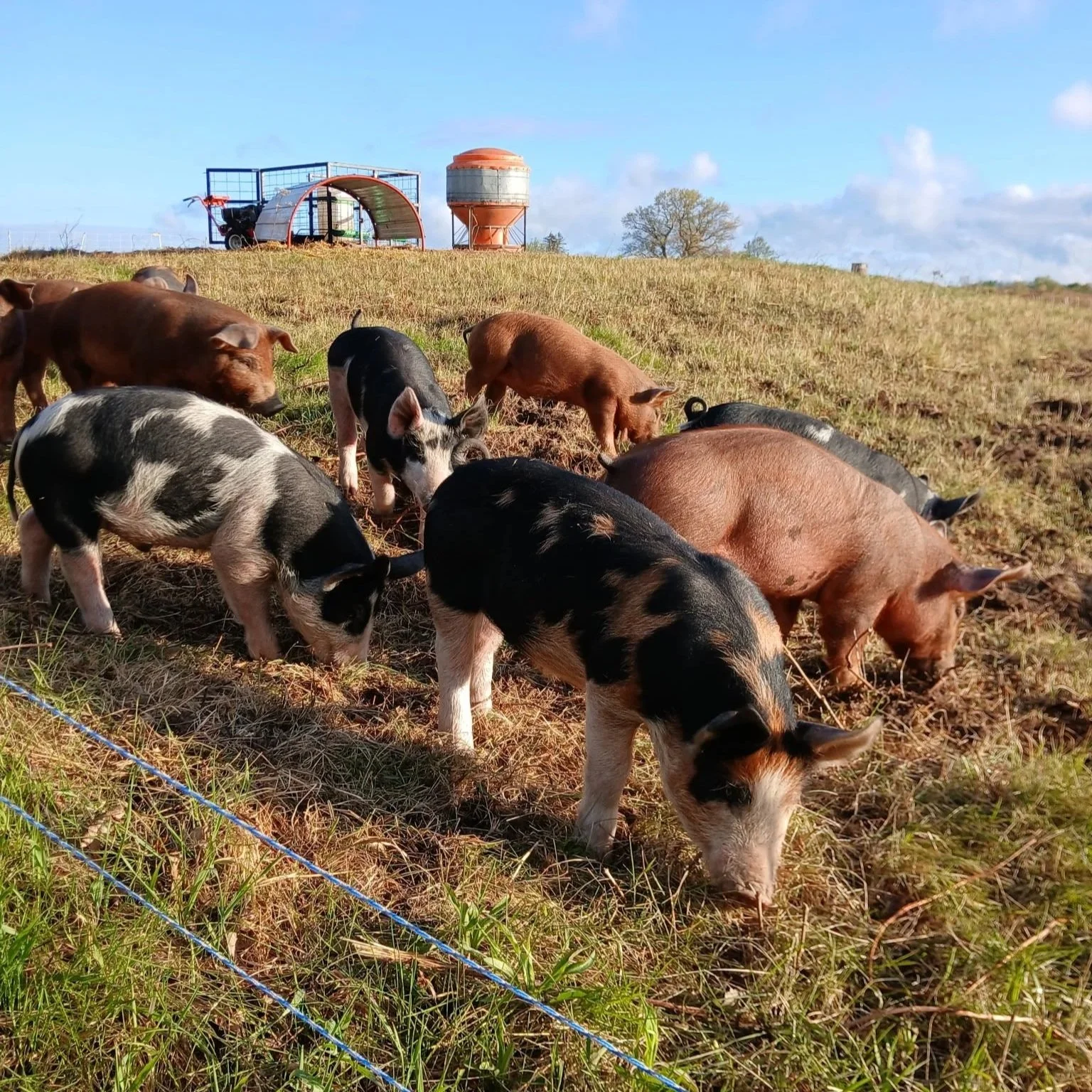
A little salad before the main course
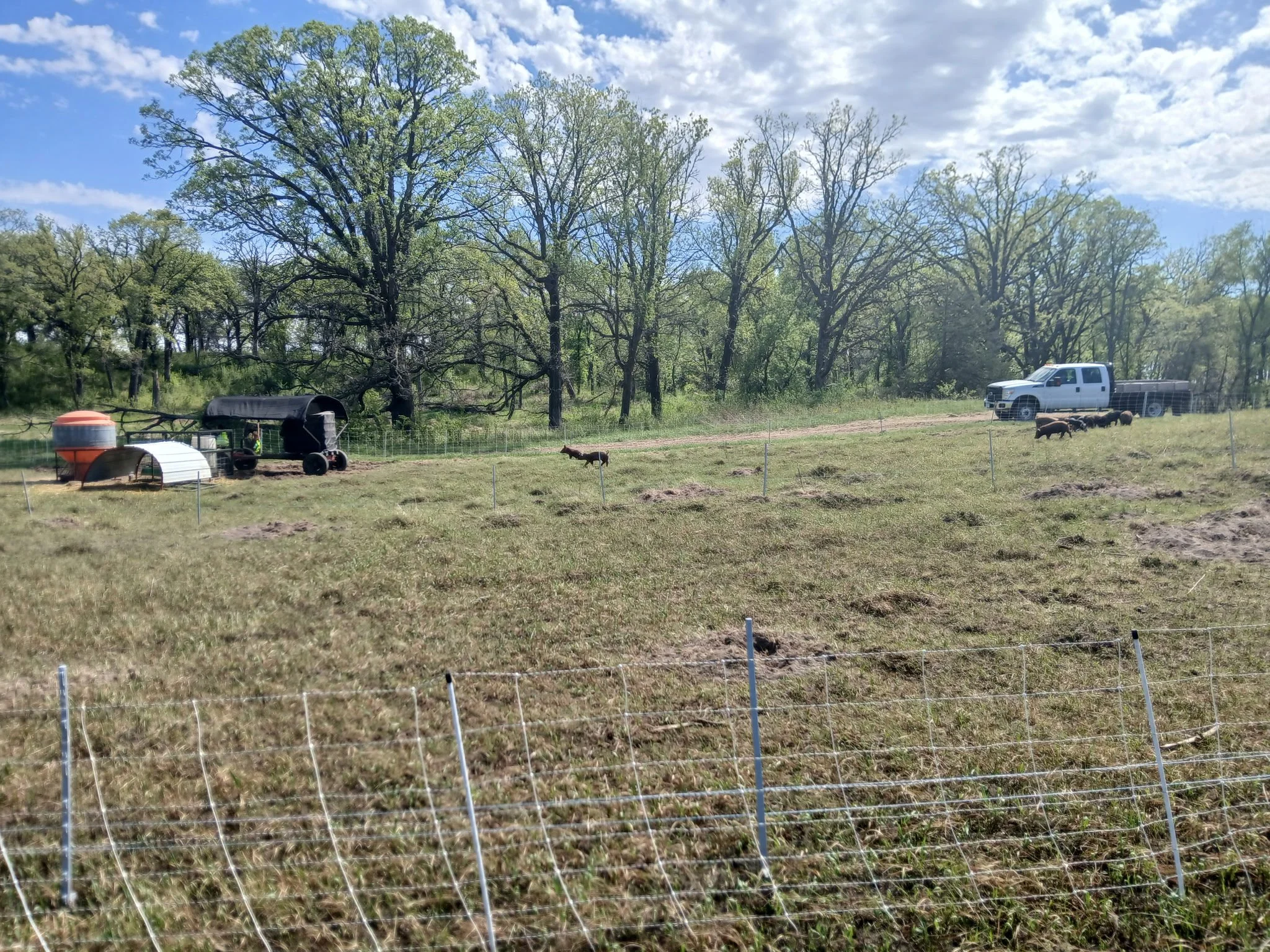
We use plastic step in posts that have a metal spike on the bottom and multiple clips for varying fence wire placements. The fence wire is a “polywire” which has metal filaments woven into it to conduct electricity. The final component in our fence is a solar/battery powered energizer. The combination of these things makes for a portable and easy-to-setup fence solution. In our setup at Lake Elmo we are also using electro-netting but only as an added visual for the pigs, to reduce risk of escape.
Setting up a new paddock starts with an import planning step - layout the current paddock in a way that the next one can be setup next to it and allow for an opening to join the two. Once setting up a new paddock the process is pretty simple; layout and step in fence posts, string one strand of wire, then double back and string a second strand above the first. (This two-wire fence is necessary for piglets and smaller hogs as they’re easily excited and not as experienced with the fence yet. The goal is to provide a better visual and guaranteed contact should they bump into it. Once they’re about 100lbs we can switch to a single wire which saves a lot of setup time.) Finally connect the energizer and test it to make sure it provides adequate shock.
The thing with an electric fence is it’s a psychological barrier, not a physical one. So a crucial step in all of this is training. Before we brought these pigs to the park we had them in a training pen that has an electric wire run along the bottom edge. Training is a matter of exposure. In the same way a child can learn a hard lesson that hot things burn your hand, piglets learn that a wire stings! 9000 volts to a wet snout makes for a pretty quick training process.
That being said, even with trained piglets we experienced a nerve wracking moment while setting up this paddock. We had already moved them into their new paddock and closed off the old one with wire, but had not moved the electro-net yet. As we approached with the tractor to move their feeder, the piglets got excited and sprinted to the feeder, running right through the fence we’d setup and into the old paddock. This is one of those moments when remaining calm and thinking on your feet is the only way through. Codi went and got our shaker bottle (a metal water bottle with metal BBs in it), which we’ve trained our pigs to respond to, and I held the fence high in the air so they could not see the wire. With a little shaking and no visual barrier they made their way back into the new area. Not all things go to plan!
Our last setup piece this week was a water and shade wagon. The water tank on this wagon is plumbed to drinking nipples just like their water barrel we started with, but provides much greater capacity and is integrated into the shade wagon. This makes it easy to move with a truck, UTV, or tractor. Why shade? Pigs do not sweat. In order to cool down they need shade, cool dirt, or mud. This shade structure is a necessary component in a pastured operation to keep them comfortable and thriving.
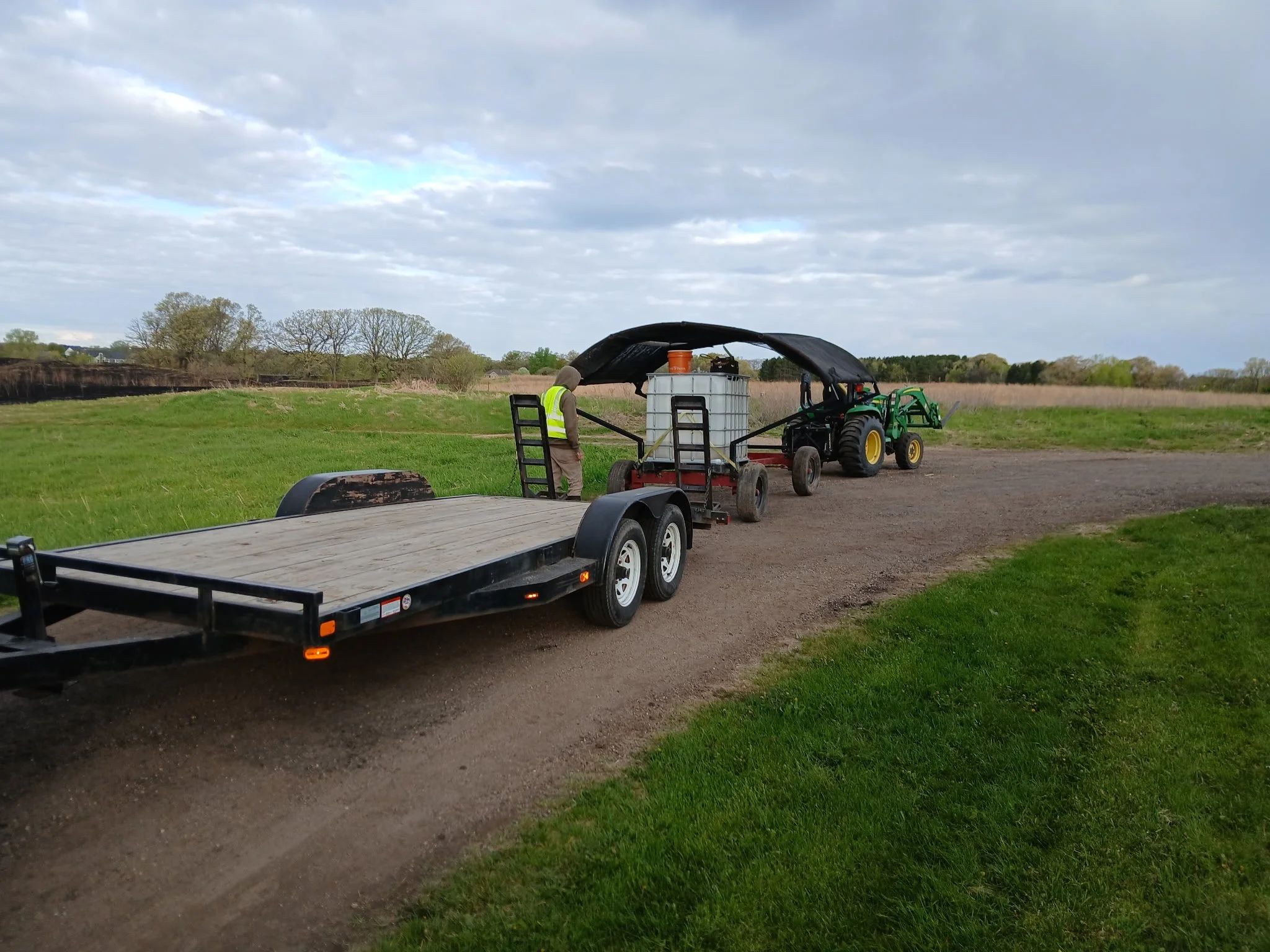
We assembled at the park to avoid losing shade cloth on the drive down
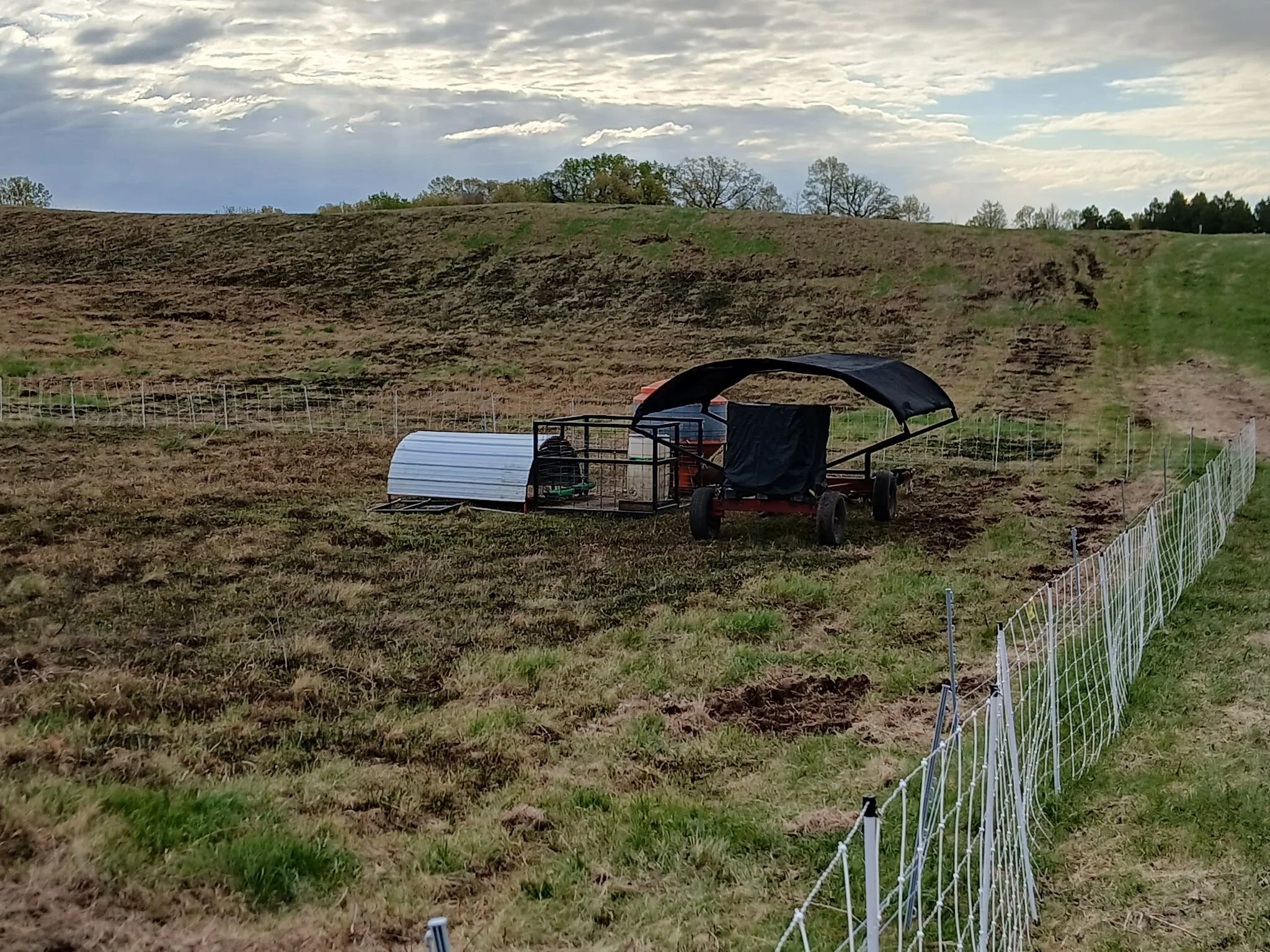
Shade/water wagon in place and a cover over our water tank to prevent algae growth
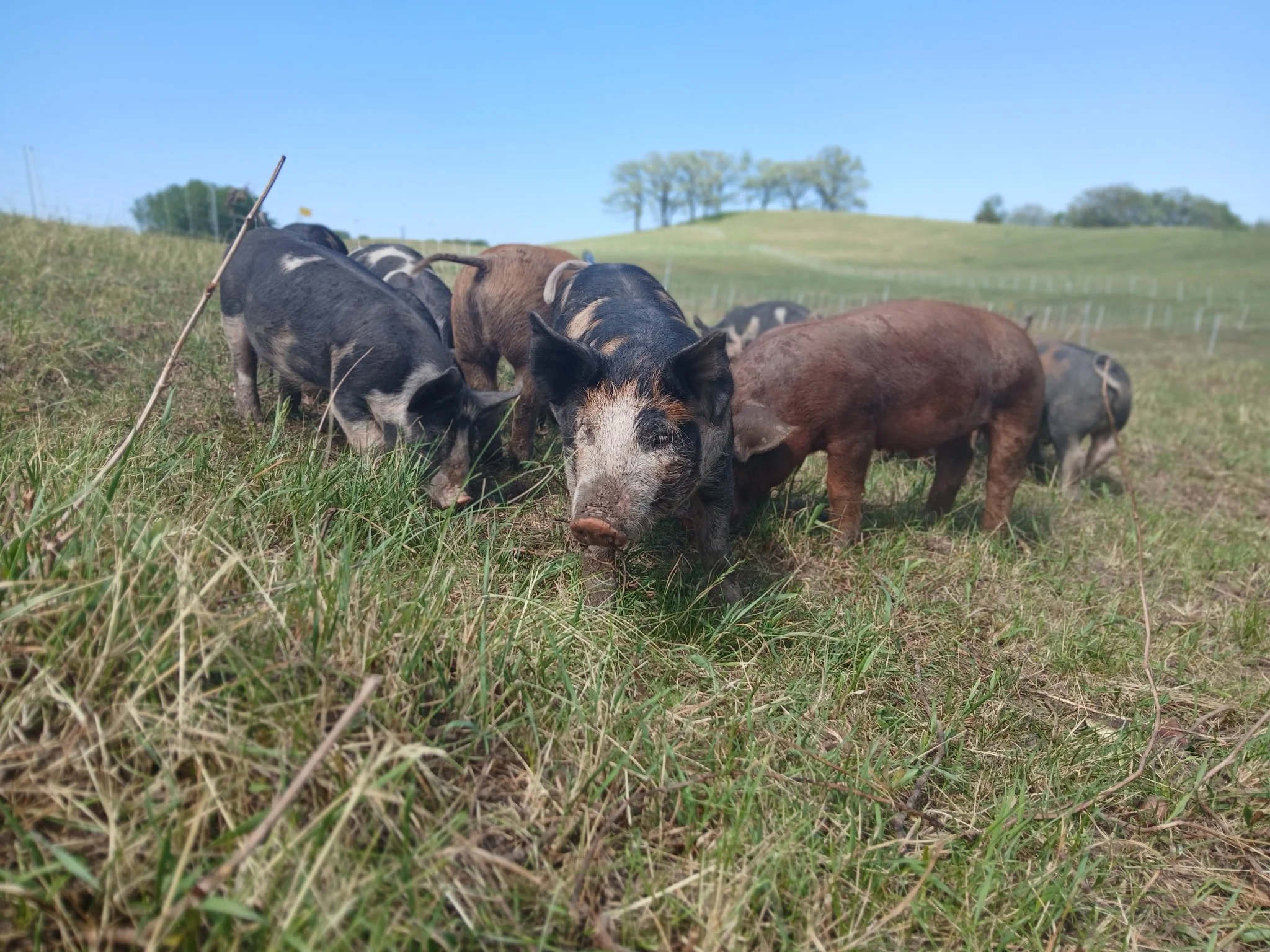
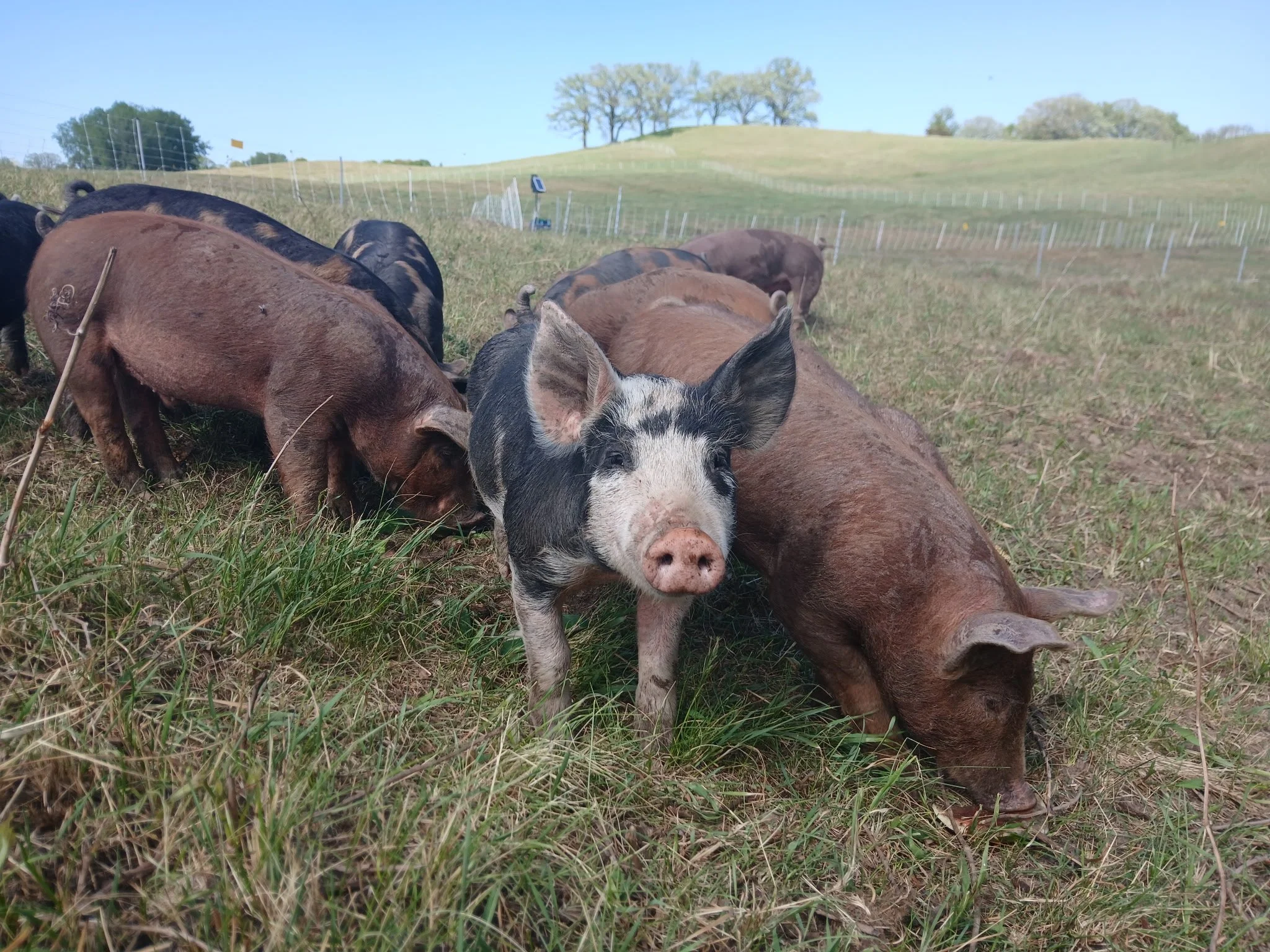
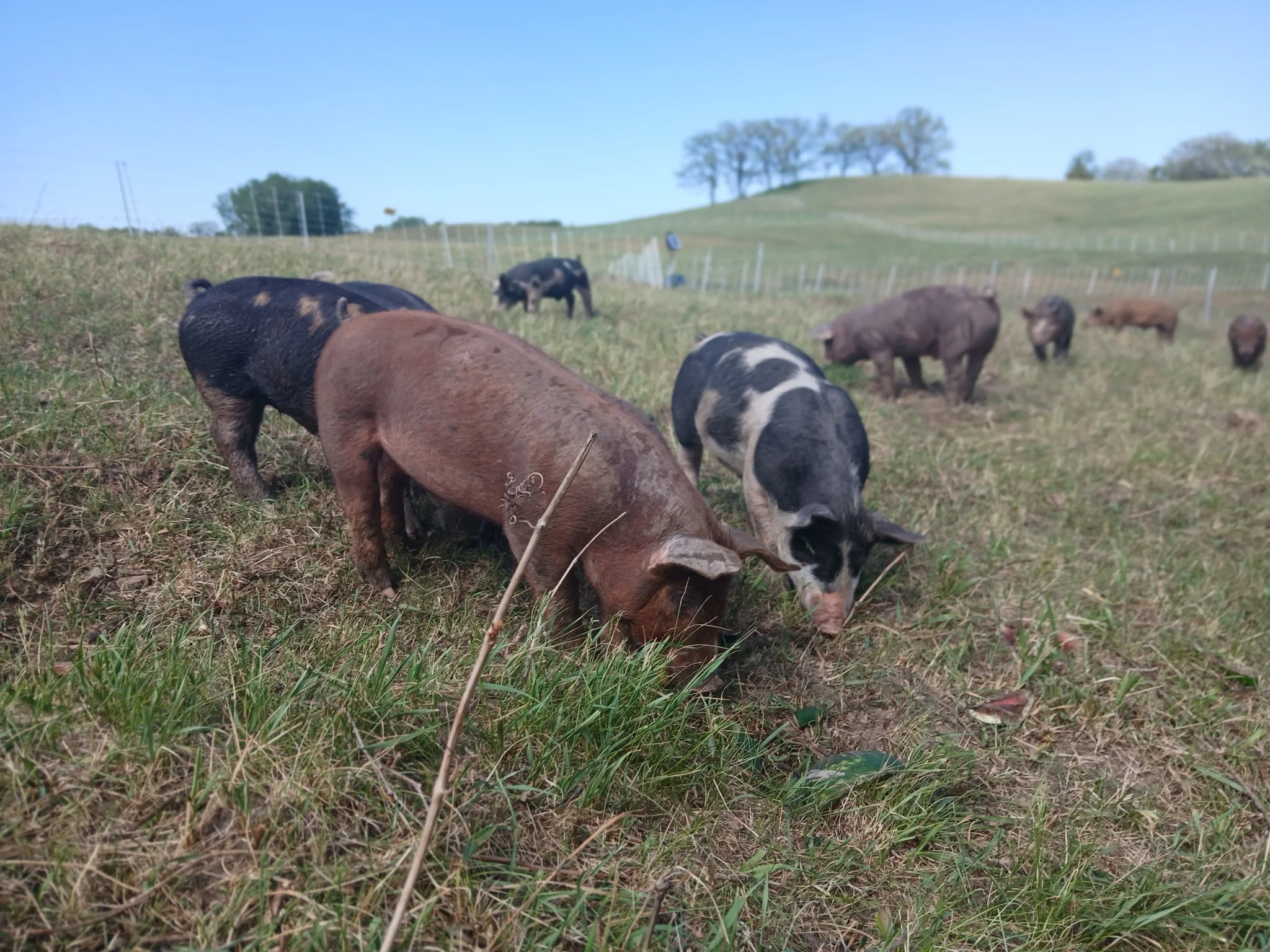
So two weeks in, we’ve got everything set and performed our first paddock move. Maybe you’re thinking “wow that sounds like a lot of work” or even questioning “why do you do it?”. Well unlike many things in our society the outcome or destination is not our only motivation. Don’t get me wrong, raising nutritious food for our community is an honor, and hearing about how much customers love the quality and flavor is exciting and something we thoroughly enjoy. But the process is where much of the joy is. In farming there is a daily dose of problem solving, working with your hands, being in nature, and most importantly in our case, working with the animals. There is nothing quite like an early morning visit to the pasture, sun rising over the horizon, due on the grass, and expectant pigs running over to see you. Whether we’ve brought some treats or can only provide a little scratch behind the ear, their demeanor is pleasant and care-free, and that is a joy! So back to why we do it - this lifestyle committed to caring for other living things, growing wholesome food, constantly learning, and embracing nature throughout the process - all of this is our “why”.
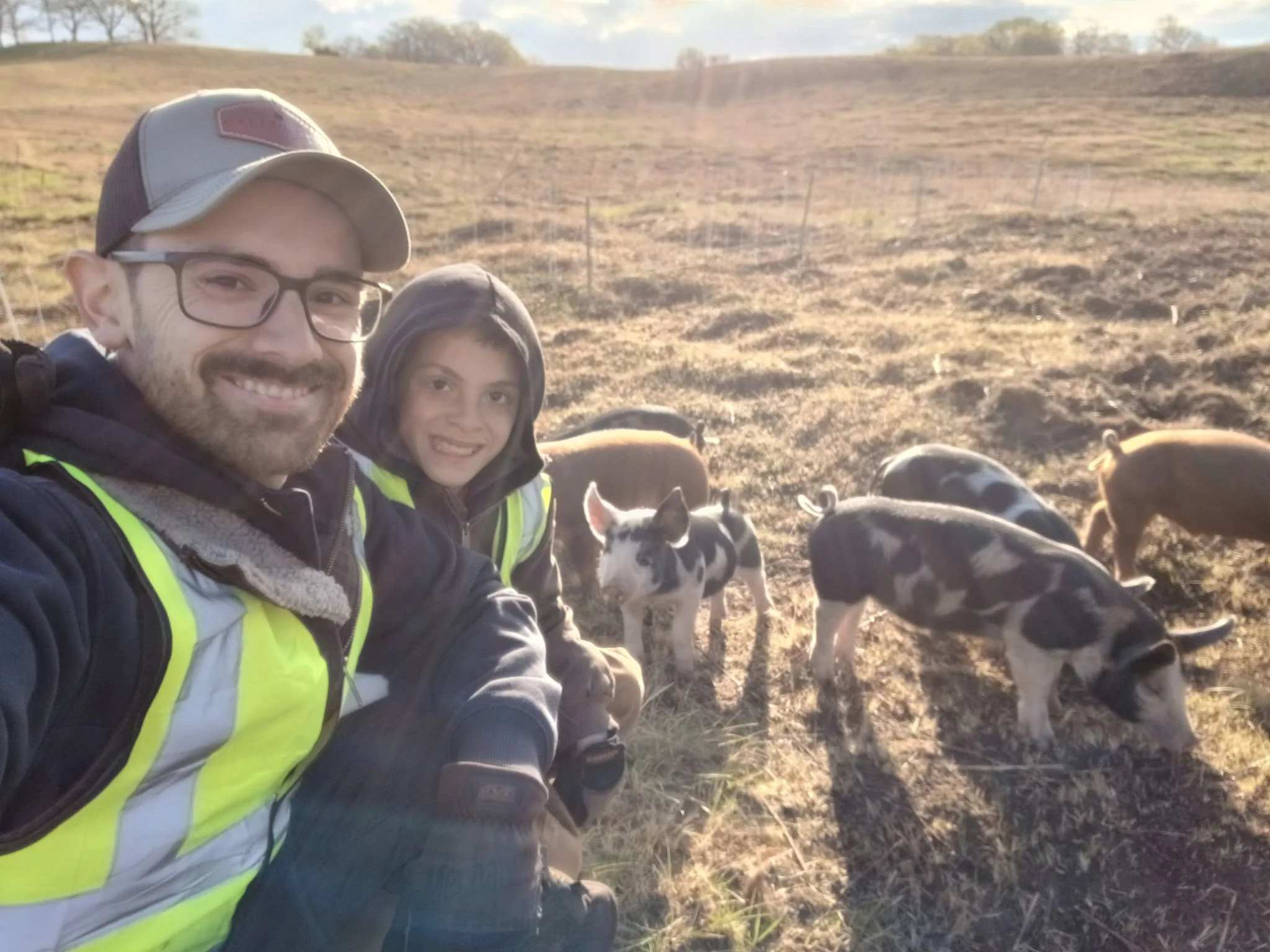
Codi and I wrapping up the job and enjoying some sunshine